
Latest Products


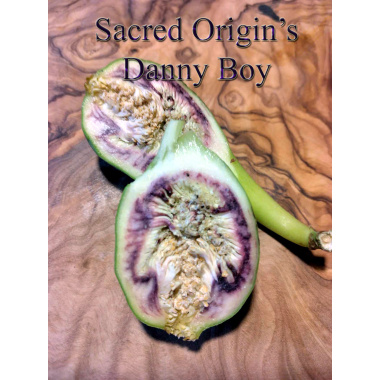
Danny Boy
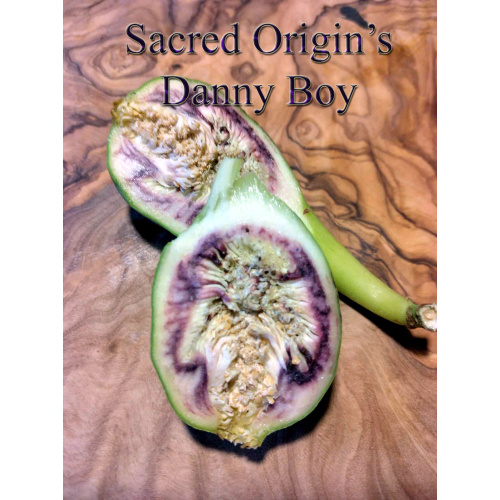
At present, not much is known about capri fig named Danny Boy, but it shows intriguing qualities that may interest breeders. Danny Boy is incredibly prolific, producing figs on nearly every node—from the top of the tree down to the base near the soil. The tree becomes alive with tiny fig wasps and reliably produces three distinct fig crops each year.
Main crop: Green with a slight purple blush and a light-colored interior
Mamme crop: Abundant green figs that overwinter and ripen in spring
Profichi crop: Extremely productive June–July crop, resembling edible figs but filled with pollen-bearing stamens and tiny fig wasps
When the time comes, millions of tiny fig wasps emerge from the mamme crop and enter the profichi figs, perpetuating the ancient reproductive cycle. By definition, a Mamme is a main crop fig that forms too late to ripen in the fall, instead remaining on the tree through winter to ripen in spring.
The profichi resemble small edible figs but are primarily used for pollination, filled with wasps and pollen. During this time, the tree becomes a buzzing haven for wasps—an ancient and fascinating spectacle of nature.
About Capri and Fig Reproduction:
Caprifigs (Ficus carica) produce three crops of syconia per year:
Profichi: Ripen in early summer; pollen-bearing and used to pollinate Calimyrna figs
Mammoni: Ripen in fall; can produce seeds when pollinated
Mamme: Overwinter on the tree and ripen in spring; house fig wasps through cold months and remain visible on leafless branches
Female edible fig trees produce only two crops:
Breba: Ripens in early summer
Main crop: Ripens in fall; receives pollen from the caprifig profichi crop during its receptive summer stage
While caprifigs primarily incubate and perpetuate fig wasps, some flowers also develop seeds, especially in the mammoni crop, where pollination can result in viable embryos even without wasps.
Danny Boy is an ancient tree that embodies the intricate, symbiotic dance of figs and wasps, producing extraordinary crops while sustaining the timeless pollination cycle. Its abundance, productivity, and reliability make it a valuable addition for anyone interested in breeding, caprification, or exploring the rich heritage of caprifigs.
Message for Availability
- Availability: Out of Stock